
Heat Exchanger Flange Design
COMPRESS automatically considers mating flange bolt loads as required by ASME VIII-1, Appendix 2-5(a)(2). When would a designer run into this situation you might ask? Heat Exchanger designs are where this situation is most often encountered.
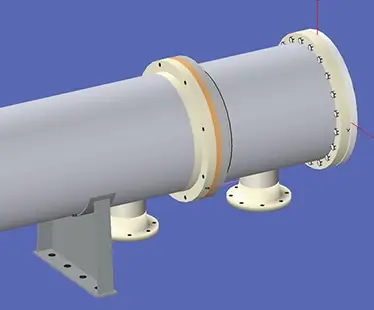
Tube side and shell side flanges share common bolting, may have different gasketing and are simultaneously subject to different pressures. The question is which side and condition governs the joint? Appendix 2-5(a)(2) addresses this situation directly. Bolt loads from gasket seating and operating conditions are determined for each flange and the controlling load is used for the design of both flanges.
Flange MAWP Analysis
COMPRESS can also determine Appendix 2 flange maximum allowable working pressures (MAWP). As there is no direct solution, COMPRESS iterates the pressures of the shell side and tube side until one of the allowable stresses is reached.
Obviously flange design (or analysis) is much more complicated when performed on a pair of mating flanges. In this case, the flanges have a common link, the bolting. The MAWP (or MAP) of a flange may be restricted so as not to overstress the bolts or to prevent one of flanges from being overstressed. There is some judgment required here as well. In certain cases the MAWP of one flange will be directly controlled by the maximum pressure of the mating flange. In other words, increasing the MAWP of one flange may reduce the MAWP of the mating flange.


+1 (941) 927-2670 | sales@codeware.com